Solar panels have become an increasingly familiar sight on British homes, warehouses, schools and commercial buildings. What was once regarded as a relatively specialist addition is steadily becoming part of the mainstream.
That shift is changing the way roofs need to be considered.
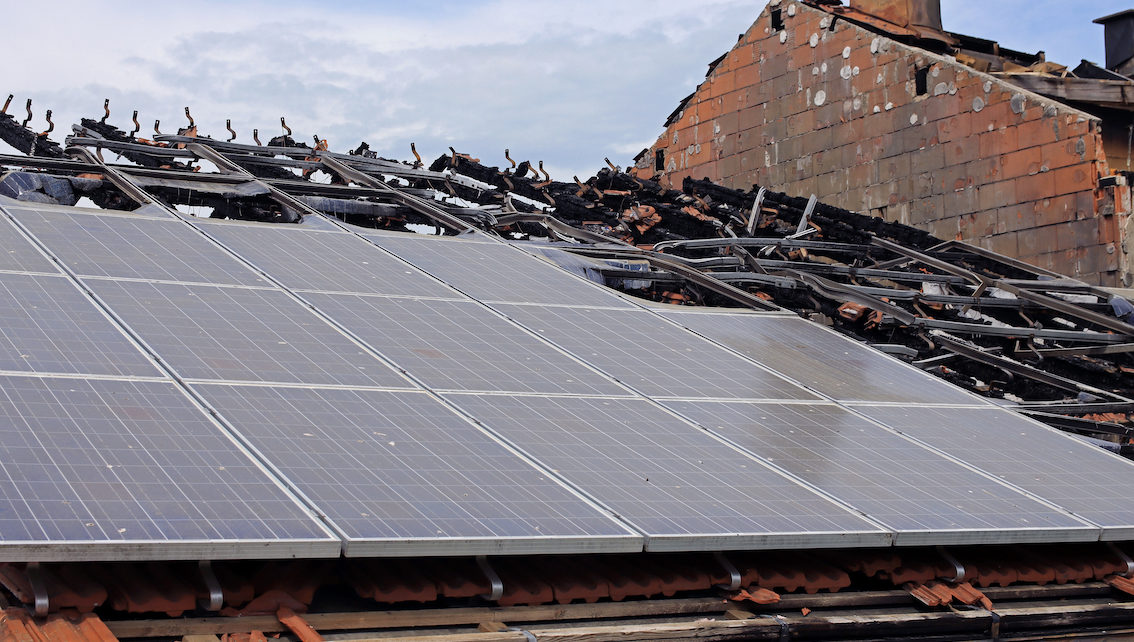
For years, much of the conversation around rooftop solar has understandably focused on energy generation, installation costs and potential savings. There is now greater attention being paid to another question: how does adding photovoltaic equipment affect the fire performance of the roof beneath it?
This does not mean solar panels should suddenly be regarded as inherently dangerous. They should not. It means that a roof fitted with photovoltaic equipment needs to be considered as a complete system rather than as a conventional roof with some panels bolted on afterwards.
As rooftop solar becomes more common, that distinction matters.
A roof changes when equipment is added to it
A conventional roof already has several jobs.
It has to keep water out, withstand wind, cope with temperature changes and, depending on its construction, contribute towards insulation, ventilation and fire resistance.
Installing solar panels introduces another layer of equipment.
There are mounting systems, brackets, rails, electrical cables, connectors and inverters to consider, alongside the panels themselves. Depending on the installation, there may also be penetrations through parts of the roof construction.
Each component may be perfectly acceptable individually. The important question is how they perform together.
This is why good solar installation cannot be separated entirely from good roofing practice.
Fire safety is receiving more attention
The Building Safety Regulator published research in 2026 examining fire safety and solar photovoltaic panels installed on roofs, reflecting the growing importance of the issue as rooftop solar deployment increases.
The wider regulatory conversation is also developing.
Proposed changes to fire-safety guidance have included specific consideration of rooftop photovoltaic systems. That is significant because it demonstrates how solar is moving from being regarded as an optional piece of equipment towards becoming something building designers and regulators increasingly expect to encounter.
For property owners, the practical message is relatively simple.
Solar installation needs to be considered as part of the building, not independently of it.
The roof beneath the panels still matters
One of the most basic questions can also be one of the easiest to overlook.
What condition is the existing roof in?
Solar panels are expected to remain in place for many years. Installing them over a roof covering that is already approaching the point where substantial maintenance or replacement will be required can create unnecessary expense later.
Imagine installing a new photovoltaic system only to discover five years afterwards that the waterproofing beneath it needs major work.
Panels may have to be removed, stored and subsequently reinstalled before the roofing work can be completed.
The cost and complexity of the project have immediately increased.
A proper roof assessment before solar installation can identify deteriorating coverings, questionable repairs, damaged flashings and other defects while they are still accessible.
For homeowners considering significant alterations to their roof, experienced residential roofing specialists can assess the existing structure and covering before additional equipment is installed.
Flat roofs present particular considerations
Solar panels and flat roofs can work extremely well together.
Large, relatively unobstructed roof areas can provide excellent opportunities for photovoltaic arrays, particularly on commercial buildings. Panels can often be positioned to achieve an appropriate orientation without being constrained by the direction of a pitched roof.
There are, however, practical issues to consider.
Drainage routes must remain accessible.
Maintenance personnel still need to move safely around the roof.
Outlets should not become difficult to inspect or clear.
The installation should not compromise the waterproofing system.
There also needs to be thought given to how the solar equipment interacts with the roof’s fire performance.
A well-designed installation considers all of these requirements before work begins rather than attempting to resolve them afterwards.
Penetrations should never be treated casually
Waterproofing and solar installation meet most obviously wherever equipment needs to be attached to the building.
On some systems, that can involve mechanical fixings or penetrations through parts of the roof construction. Other systems use alternative mounting arrangements.
Either way, the integrity of the waterproofing remains critical.
A tiny defect around a fixing may not immediately cause a visible leak. Water can travel within roof constructions before finally appearing inside the building some distance away.
This is particularly frustrating because the installation above can make subsequent investigation more difficult.
It is another reason roofing and solar should not be viewed as unrelated trades working on the same building.
The interface between them matters.
Commercial buildings raise the stakes
The growth of rooftop solar on commercial property is particularly interesting.
Warehouses, factories, retail buildings and offices often have enormous roof areas that can potentially generate substantial amounts of electricity.
From an energy perspective, that space is extremely valuable.
From a roofing perspective, it means a surface originally designed primarily to protect the building may now support a significant piece of energy infrastructure.
Commercial property owners therefore need to consider access, maintenance, drainage, waterproofing and fire safety alongside energy generation.
There is also the question of what happens during the life of the installation.
A commercial roof may need inspections, localised repairs or maintenance long before the solar equipment reaches the end of its useful life.
Good design leaves those possibilities open.
Specialist commercial roofing services can help ensure the underlying roof remains maintainable rather than allowing the solar installation to make routine work unnecessarily complicated.
Access is easy to forget during the design stage
Solar panels make productive use of otherwise empty space, but filling every available square metre is not always sensible.
Roofers still need to inspect the building.
Drainage outlets still need clearing.
Rooflights, vents and plant equipment may need servicing.
Emergency access may also be required.
A layout that maximises generation while making basic maintenance almost impossible can prove frustrating over the following decades.
This is particularly important on commercial flat roofs where multiple contractors may require access throughout the year.
The best installations consider the people who will eventually have to work around them.
Waterproofing needs to last alongside the technology
There is little sense installing equipment expected to operate for decades onto waterproofing with only a limited remaining service life.
This is where planning becomes particularly important on older flat roofs.
Sometimes the most economical approach is to repair or renew the waterproofing before installing solar, even if the existing roof has not yet started leaking.
That can feel counterintuitive.
Why replace something that still appears to work?
Because coordinating the lifespan of the roof and the equipment above it may prove considerably cheaper than dismantling a solar installation several years later to carry out work that could have been anticipated.
Modern systems such as Alwitra Evalon roofing are used where long-term waterproofing performance is an important consideration, particularly on flat and commercial roof applications.
The appropriate solution will always depend on the individual building, but expected lifespan deserves a place in the conversation from the beginning.
Solar should not become an excuse to neglect the roof
There is another, less technical problem.
Once panels cover significant areas of a roof, property owners can become even less likely to look at what is happening underneath them.
Minor deterioration becomes harder to see from ground level.
Debris can accumulate in less visible areas.
Bird activity may increase around some installations.
Drainage problems can remain unnoticed until rainfall exposes them.
Routine inspection therefore becomes more important, not less.
The presence of solar panels does not remove the maintenance requirements of the roof beneath them.
This is ultimately a design issue
Much of the concern surrounding solar and roof safety can be avoided by thinking about the building as a whole.
The roof needs to remain waterproof.
The photovoltaic system needs to generate electricity safely.
Drainage needs to work.
Maintenance access needs to remain possible.
The combined construction needs to meet appropriate fire-safety requirements.
None of those objectives is unusual. The difficulty comes when each is considered separately.
Britain is likely to see considerably more rooftop solar over the coming years, and that should be welcomed where installations are appropriate. Roofs represent a huge area of underused space capable of contributing towards lower-carbon energy generation.
But making better use of that space also changes what we ask our roofs to do.
The most successful solar projects will not simply be the ones that generate the most electricity. They will be the ones where the panels, electrical equipment, waterproofing and underlying roof have been designed to work together for decades.
That is the conversation the growth of rooftop solar is now forcing the construction industry to have – and it is one worth having before the panels go on, rather than after a problem appears.